


Close


Close
In the heart of rural Western Australia, Willi Wag Tails Family Day Care is showing how innovation and community spirit can work hand in hand. Since gaining service approval in 2019, Willi Wag Tails has created meaningful early learning opportunities in towns where traditional long day care models are simply not sustainable.
For families across small and remote communities, the in-venue care model has been a game changer – helping parents to return to work, attracting essential workers to the region and strengthening local community connections.
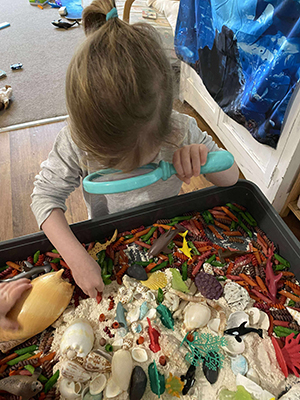
Willi Wag Tails operates across rural and remote Western Australia, with in-venue care established throughout the Wheatbelt and Great Southern shires, including towns such as Beacon, Bencubbin, Beverley, Dumbleyung, Wickepin, Wyalkatchem and Williams.
Many of these small towns previously had no access to early childhood education and care, as centre-based models were not viable and educator shortages made it difficult to attract staff.
“If you don’t have a service, then families leave”, explains Service Manager, Sharon Palumbo.
To address this, Willi Wag Tails worked closely with local shires to identify unmet needs and find practical solutions that fit each community. This collaborative approach led to the development of an in-venue care model, where qualified family day care educators provide education and care from community buildings or facilities that have been approved by the WA Education and Care Regulatory Unit (ECRU).
Through partnerships with shires, underused community building have been transformed into vibrant education and care venues – from old kindergarten demountable to community halls and recreation centres. Many of these facilities now serve dual purposes, used by family day care educators during the week and available for playgroups, arts groups or other community events at other times.
For the shires involved, this approach delivers lasting value. Buildings that once stood empty are now supporting local employment, increasing family participation and adding vitality to small towns.
There are now eight in-venue care sites operating under Willi Wag Tails, each tailored to its local community’s needs. Some venues offer standard weekday care, while others also provide before and after school or vacation care, depending on local demand.

Educators receive ongoing support and regular visits from the coordination team at Willi Wag Tails to ensure all policies and procedures are being followed. The service also utilises Harmony software to provide remote oversight and real-time access to educators.
The partnership between Willi Wag Tails, local shires and the ECRU has been central to the model’s success.
“It’s about listening to the community,” says Sharon. “If you want to set up a service, you’ve got to give the community what they need – otherwise they won’t use it.”
While the in-venue model has flourished, it hasn’t been without challenges. Meeting fencing and safety requirements, navigating approval processes and recruiting educators in remote areas have all required persistence and flexibility.
The service has found that a supportive and flexible approach – coupled with strong relationships with local government and the regulatory authority – has been key to smoothing the process.
Sharon highlights how the Certificate III qualification requirement can also delay growth in rural areas, where access to training is limited.
“That has been very impactful for us, particularly in rural and remote areas,” she says. “If we find an educator that hasn’t got a qualification, then it’s another 12 months delay”.
Despite these challenges, Sharon remains committed to finding new ways to support educators and to make the model work for families. She believes that targeted funding, such as small grants to support venue setup costs or resourcing, could make a significant difference in helping new educators get established.
The in-venue model has delivered tangible benefits for both educators and families in these communities. Educators value the clear separation between work and home life, something not always possible in traditional family day care settings.
Families also appreciate having access to local and reliable care. Demand for places continues to grow, with some communities now maintaining waitlists.
“The communities that didn’t have care are so surprised and don’t know how they’ve survived without us,” Sharon reflects.
The model’s sustainability lies in its scalability. With a single educator operating in a shared community space, the cost of establishing and maintaining properties remains manageable, while educators can still provide high-quality early education and care in places that need it most.
“Family day care is sustainable. It’s far more sustainable in rural and remote locations, and it’s so much easier to set up and manage,” Sharon notes.
Willi Wag Tails continues to explore opportunities to extend its reach, in line with community demand. The success of the in-venue care model isn’t just measured only by the number of venues established, but by the families and communities it supports. Each venue represents a thriving partnership between the service, the shire, the educator and the families who rely on it, showing what’s possible when innovation meets community need.

.svg)

