


Close


Close
When devastating floods swept through the Northern Rivers region of New South Wales in 2022, families, businesses and community infrastructure were significantly impacted. For family day care educators in Woodburn, the floods also meant losing access to their approved residences and being unable to continue providing education and care from their homes.
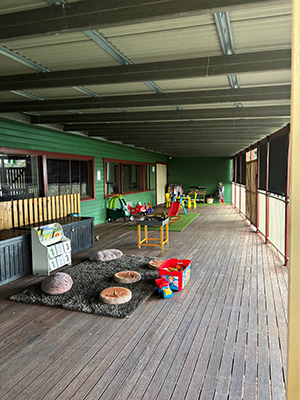
Faced with the prospect of losing valuable early childhood education and care places at a time when families needed support most, Far North Coast Family Day Care began exploring an alternative solution that would enable educators to continue operating while supporting the community's recovery.
Working alongside Richmond Valley Council, local community organisations and regulatory authorities, the service transformed the Woodburn Memorial Hall into an approved family day care venue, creating an innovative dual educator model that enabled two educators to continue operating independently from a shared location.
The venue was designed to support two independent family day care educators operating side by side from the same approved location. Each educator maintained responsibility for their own enrolled children, educational program, documentation and compliance requirements, while also benefiting from the collaboration, peer support and reduced isolation associated with working alongside another educator.
"I think it's a fantastic model. We would do it over and over again if we could," said Sharon Foran, Manager, Far North Coast Family Day Care.
The model delivered an important outcome within a short timeframe. Within eight weeks of the floods, children had returned to care, providing much-needed support to families during a challenging period of recovery.
But the impact extended well beyond restoring education and care services. Families were able to access regulated, familiar and flexible education and care while rebuilding their lives, returning to work and re-establishing routines. The model also enabled both educators to remain in family day care at a time when they were at significant risk of leaving the sector altogether.
"It became such an asset to the community. It helped families get back to work, rebuild their lives and reconnect with each other after the floods," Sharon said.
While the model was established in response to a disaster, the experience has highlighted broader opportunities for family day care. By enabling multiple educators to operate independently from a shared approved venue, the model demonstrates how family day care can respond to local challenges while maintaining the personalised, relationship-based approach that families value.
The experience also highlights the potential for dual educator, venue-based family day care to support communities experiencing workforce shortages, housing constraints, natural disasters or limited access to traditional early childhood education and care services, while maintaining educator independence and the unique strengths of the family day care model.
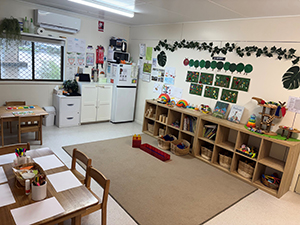
The Woodburn experience also aligns with broader national discussions about innovative approaches to increasing access to education and care. In its 2024 inquiry report on early childhood education and care, the Productivity Commission recommended amending the National Quality Framework to allow two family day care educators to provide education and care from a single approved venue in regional and remote Australia. Under the recommendation, two educators could provide care for up to 14 children at any one time, with no more than eight children preschool age or under.
The ongoing operation of the Woodburn venue provides a practical example of a dual educator arrangement operating within the family day care framework. While one educator has since transitioned from the venue, Far North Coast Family Day Care remains committed to maintaining the approval and exploring opportunities to recruit a second educator to maximise the use of the space and continue supporting local families.
For Far North Coast Family Day Care, the Woodburn model demonstrates what can be achieved when services, councils, communities and educators work together to develop innovative solutions to local challenges.
"I'd hate to think we couldn't do something like this again in the future. We've seen first-hand what it can achieve for children, families and communities," Sharon said.

.svg)

